The AI Native Company
How to become an AI native company:
This piece also exists as a self-contained interactive page — dithered animations, a light/dark toggle, everything in one file. Download the HTML and it works offline.
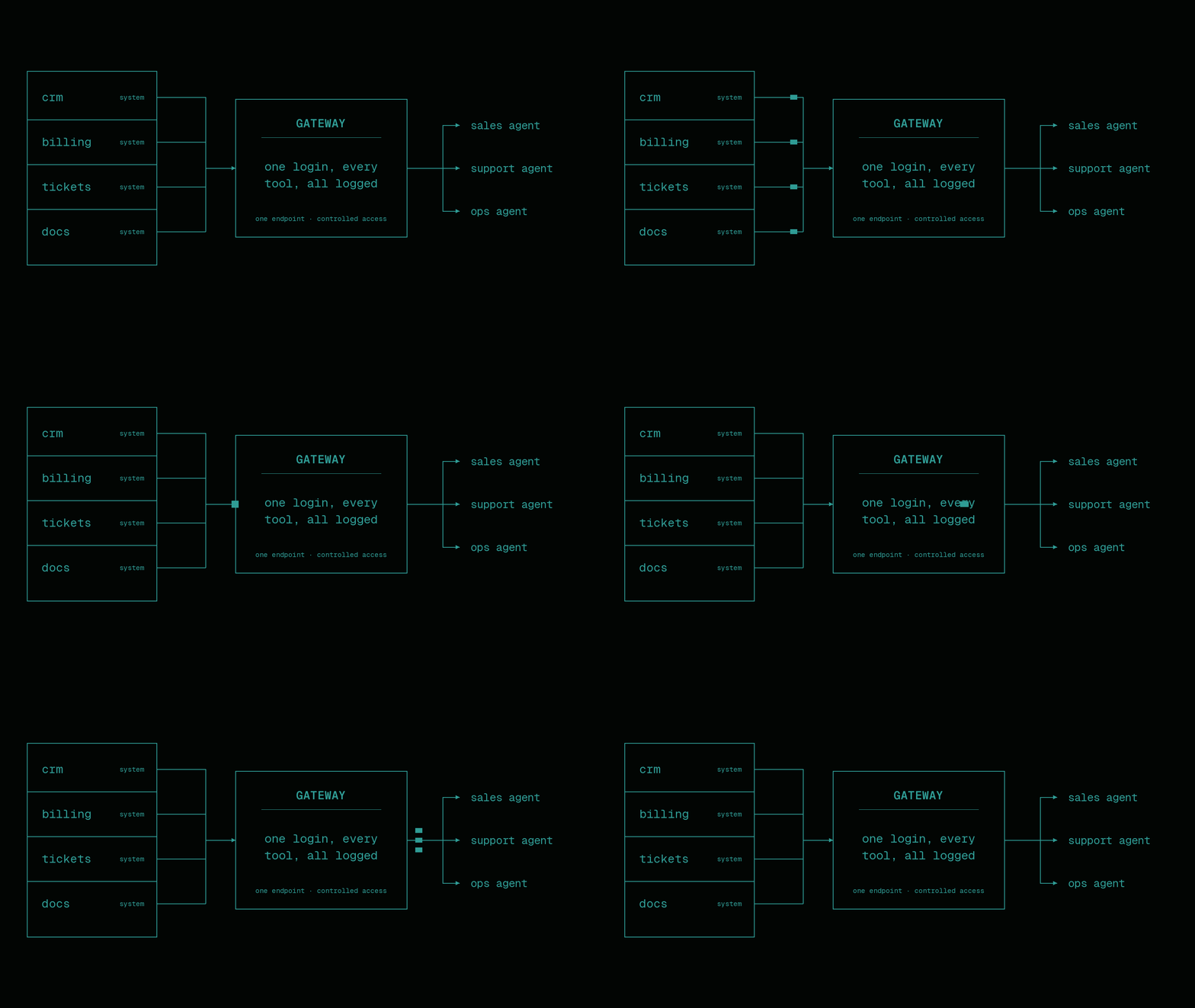
Create a single MCP/API gateway. Let your team connect to your systems.
Stand up one gateway that exposes your internal systems as tools behind a single login. CRM, billing, ticketing and internal APIs each get a connector. A team’s agent then connects to one endpoint instead of five separate integrations, and you control and log access in one place.
Create a company brain
AI works on context.
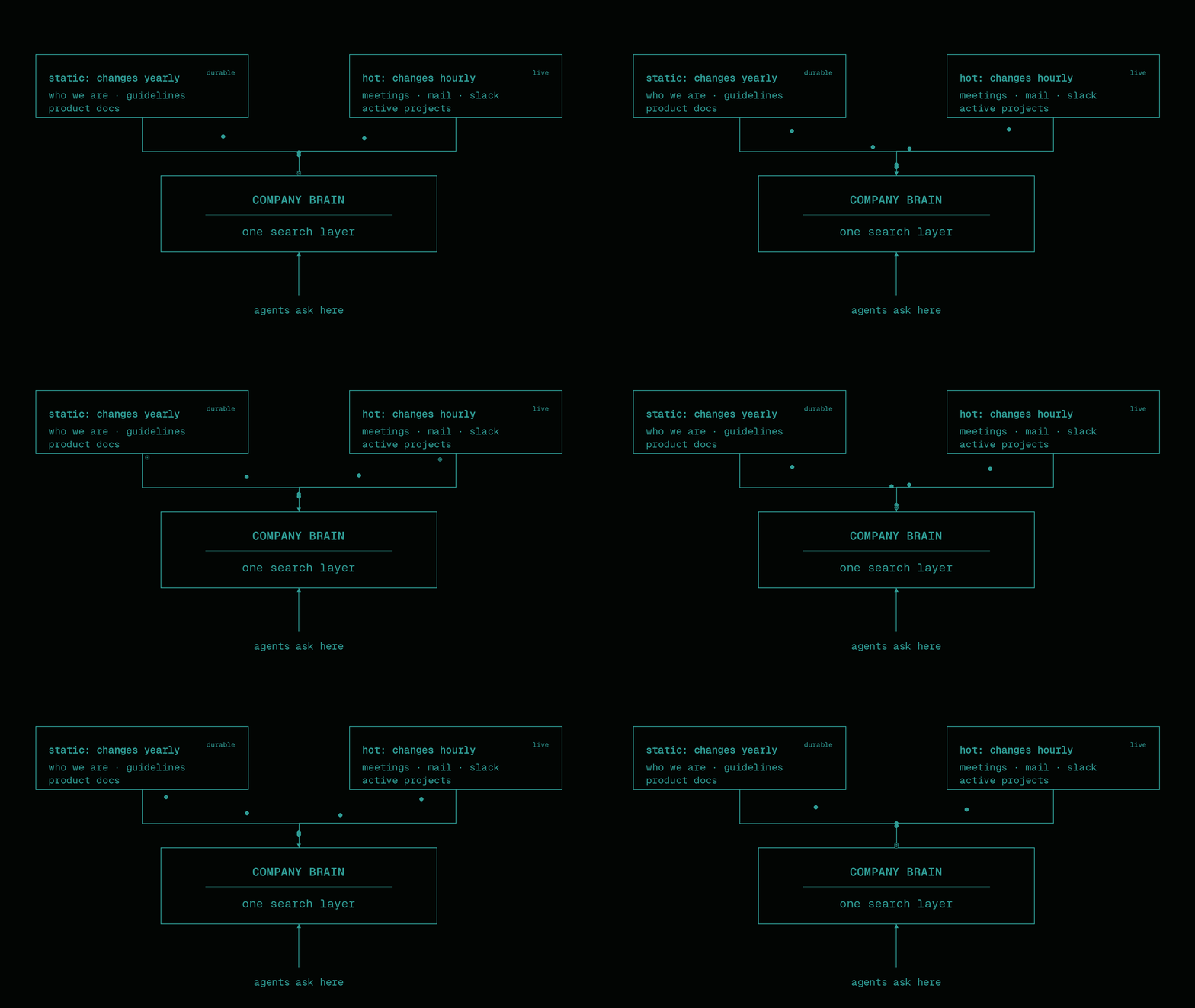
Connect your static context: “Who are we”, “guidelines”, “product docs”.
Connect your hot context: meeting notes, emails, slack, active projects.
Static context changes rarely: write it once and keep it current in a store an agent can search. Hot context goes stale in days, so pipe it in automatically from the tools where it already lives, because nobody will file it by hand. One search layer over both answers who owns a project and what the team decided last week. The hot term for this as consumed downstream by agents is RAG (retrieval augmented generation), or sometimes referred to as a knowledge base.
Great write up from Cerebras: How we built our knowledge base
Create a company harness. Instruct AI on how to interact with your company brain and systems.
The harness is configuration: system prompts that state your rules, tool definitions pointed at the gateway, and permission lists that say what an agent may touch. Keep it in a repo the whole company can read and propose changes to. When the company changes how it works, change the harness once and every agent picks it up.

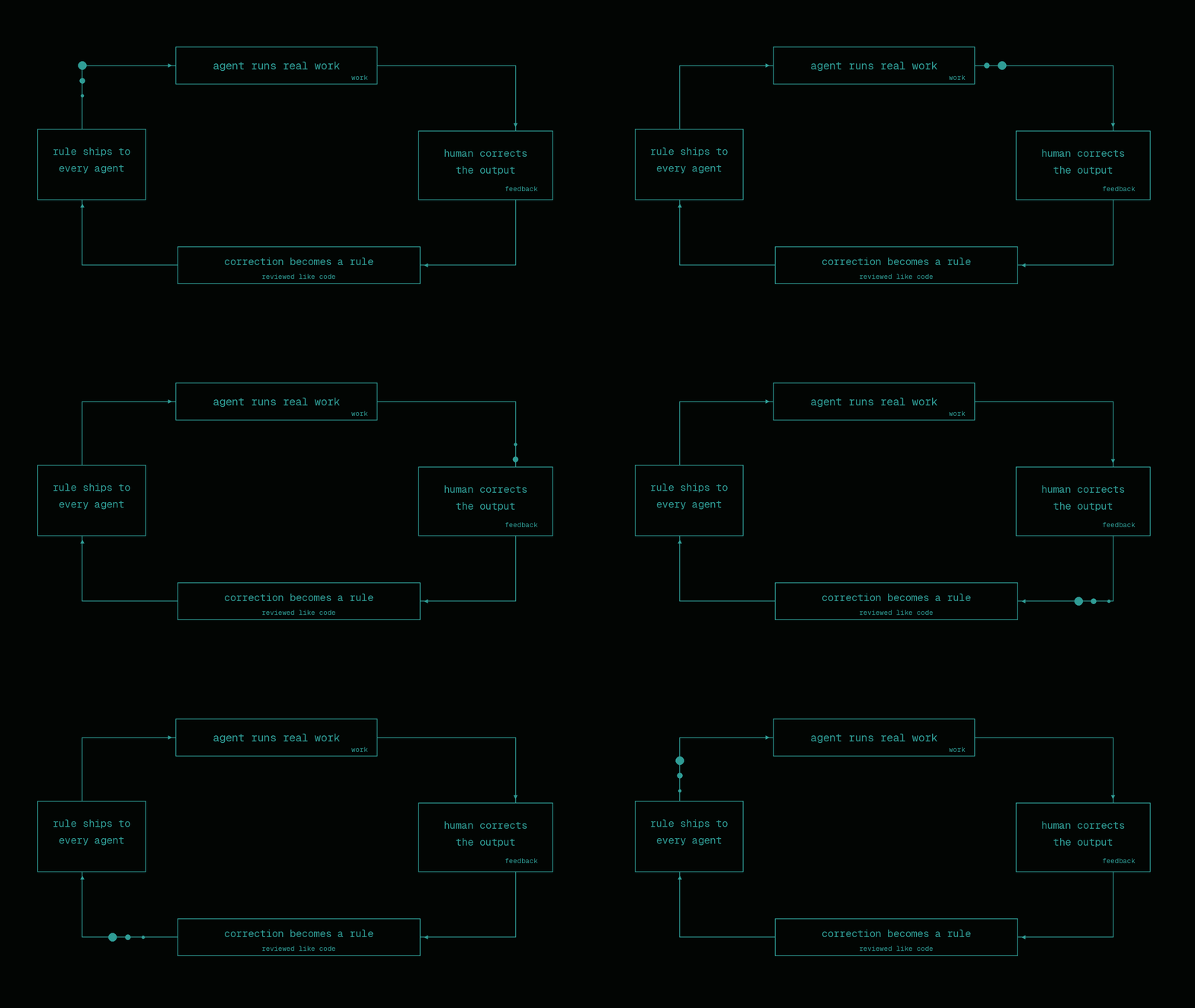
Onboard your team into the harness. Create a self-improving loop. Let it learn from their work.
Get every team to run real work through the harness, and make the loop concrete: when someone corrects an agent, that correction lands in the harness or the brain as a written rule. A fix that stays in a chat window helps nobody. Review these additions the way you review code, or the shared setup fills up with one person’s habits.
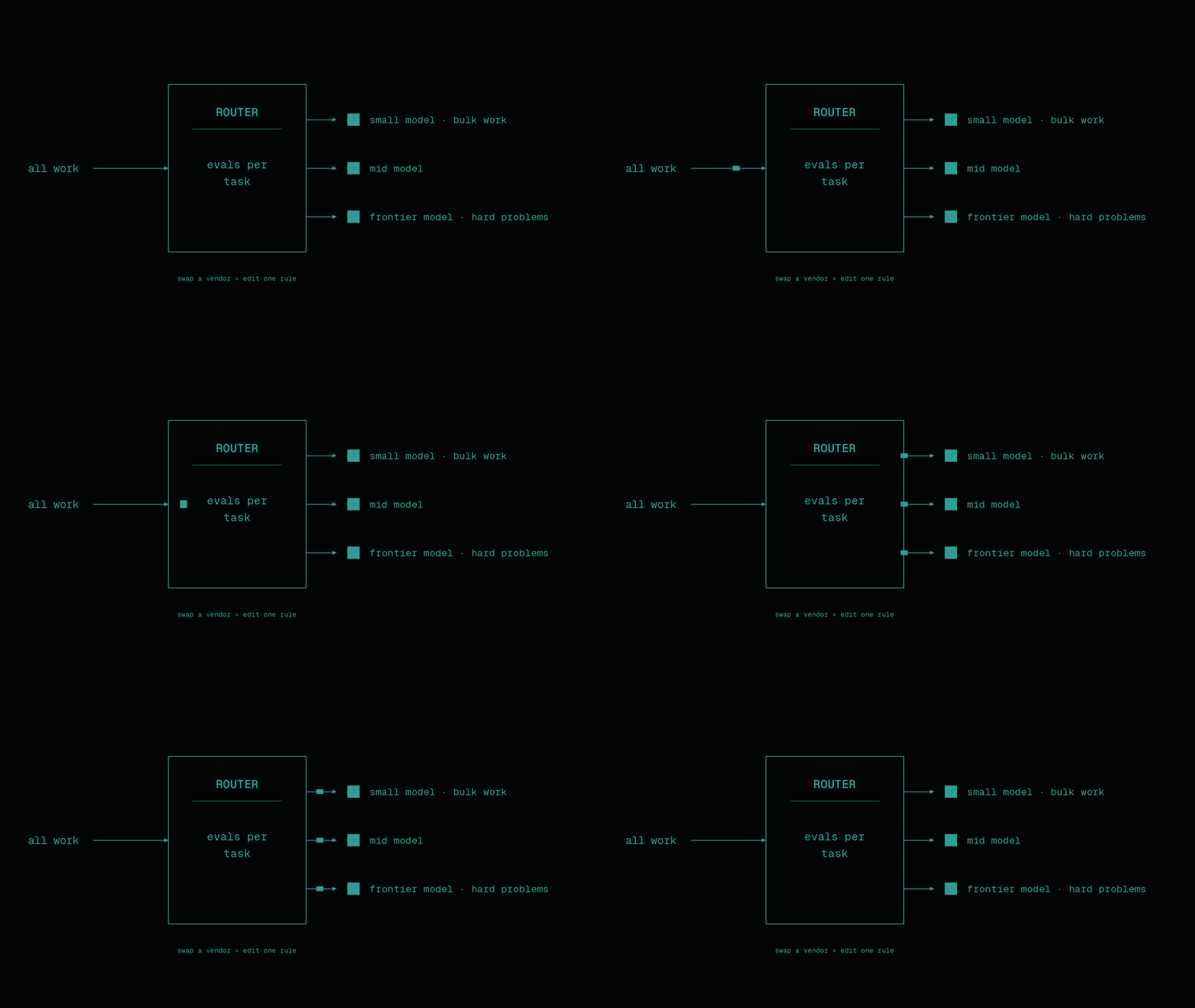
Create a model-routing layer. Evaluate and distribute work to the right model, at the right time. Remove vendor risk.
Put one API in front of every model vendor. Send bulk work such as summaries and extraction to cheap models and hard reasoning to strong ones, and keep a small test set per task so measured quality decides the route. When a vendor raises prices or drops quality, you edit one routing rule and every caller follows.
Build autonomous agents on top of your company harness.
Begin with jobs that have a clear pass or fail check, such as ticket triage or first drafts of routine reports. An autonomous agent uses the same gateway, brain and harness your people use, so it inherits your rules from day one. Keep a human approving its output until the error rate shows you no longer need one.